創作館|Shinji Fukuyama Official Website

創作館は福山慎二による思想研究サイトです。哲学・心理学・宗教学・創作論を横断し、想像性・霊性・直観性・座標論・人生構造分析などの独自理論を公開しています。

年別: 2024年

異常考 -おそれ体験小話

This article explores the concept of the "anomaly"—experiences that defy our established logic and trigger an inherent sense of fear or awe. The author frames these uncanny moments not as mere irregularities, but as pivotal encounters that reveal the limitations of our cognitive "coordinates." By examining such "fear-based experiences," the piece suggests that confronting the anomalous is essential for broadening our perception of reality, forcing us to reconcile our rigid mental frameworks with the unpredictable, multifaceted nature of existence.

数の意識構造考

This article delves deeper into the structural mechanisms of how we perceive numbers, building upon previous reflections. The author argues that numerical awareness is not an inherent, universal absolute, but rather a structured cognitive framework shaped by our underlying "coordinates." By examining how humans mentally organize and process numerical values, the piece reveals that our understanding of mathematics and quantity is deeply entwined with our cultural and philosophical orientation. Ultimately, recognizing this hidden structure allows us to see how deeply numbers govern our perception of reality and everyday existence.

日本国内建設業界を主軸とした問題への具申

This article addresses the systemic issues facing Japan's construction industry, exploring them not merely as logistical challenges but as structural misalignments in our societal "coordinates." The author examines problems such as labor shortages and outdated practices, proposing that true reform requires a fundamental shift in perspective. Rather than applying superficial fixes, the industry must realign its traditional frameworks with modern realities. By adopting a comprehensive, dual perspective—valuing both hands-on field experience and objective, strategic oversight—we can rebuild the industry's foundational structures to better support sustainable growth and human potential in a changing world.

性格タイプ論について 概観

The rise of personality typology mirrors past trends, like Four Pillars Astrology, which influenced societal behaviors. Both reflect a shift in modern culture towards focusing on the mind amidst a materialistic age.

数について 備忘録

This article reflects on the nature of numbers, positioning them not merely as tools for calculation but as foundational units through which humans perceive and structure the world. The author treats numbers as a complex subject of inquiry, exploring how numerical sequences and their cultural interpretations—such as traditional Japanese counting—act as vital "coordinates" that shape our cognitive framework. It serves as a personal meditation on how numerical concepts underpin our understanding of existence.

君が代解釈考 日本民族思想の片鱗

This article examines the national anthem "Kimigayo" as a profound window into Japanese ethno-philosophy. Moving beyond modern political debates, the author explores how its ancient lyrics reflect a unique spiritual and temporal worldview. By analyzing the anthem’s underlying aesthetic and cosmic consciousness, the article illustrates how specific cultural symbols serve as essential "coordinates" that anchor a people’s identity and collective perception of time, offering deeper insights into the traditional Japanese mind.

宗教考 -宗教と哲学-

This article explores the deep connection between religious thought, philosophy, and religion, examining how they function as foundational "coordinates" for human perception. Rather than viewing them simply as abstract doctrines or rigid belief systems, the author suggests that both philosophy and religion provide essential frameworks through which individuals interpret reality, morality, and existence. By understanding how these profound, internalized structures shape our daily perspectives and actions, we can better appreciate the diverse ways people navigate life's complexities and cultivate a deeper, more empathetic understanding of the human experience.

日常考 (一)

This article explores the profound idea that everyday life is the primary arena where thought and philosophy manifest most concretely. Rather than viewing philosophy as an abstract pursuit, the author suggests that our daily routines, choices, and mundane interactions are the truest expressions of our underlying beliefs. By paying close attention to the ordinary moments of our lives, we can uncover deep philosophical truths. Ultimately, true wisdom and our unique perspectives are not found in distant theories, but are actively lived, practiced, and realized within the continuous flow of our daily existence.

多様性の座標 -願い-

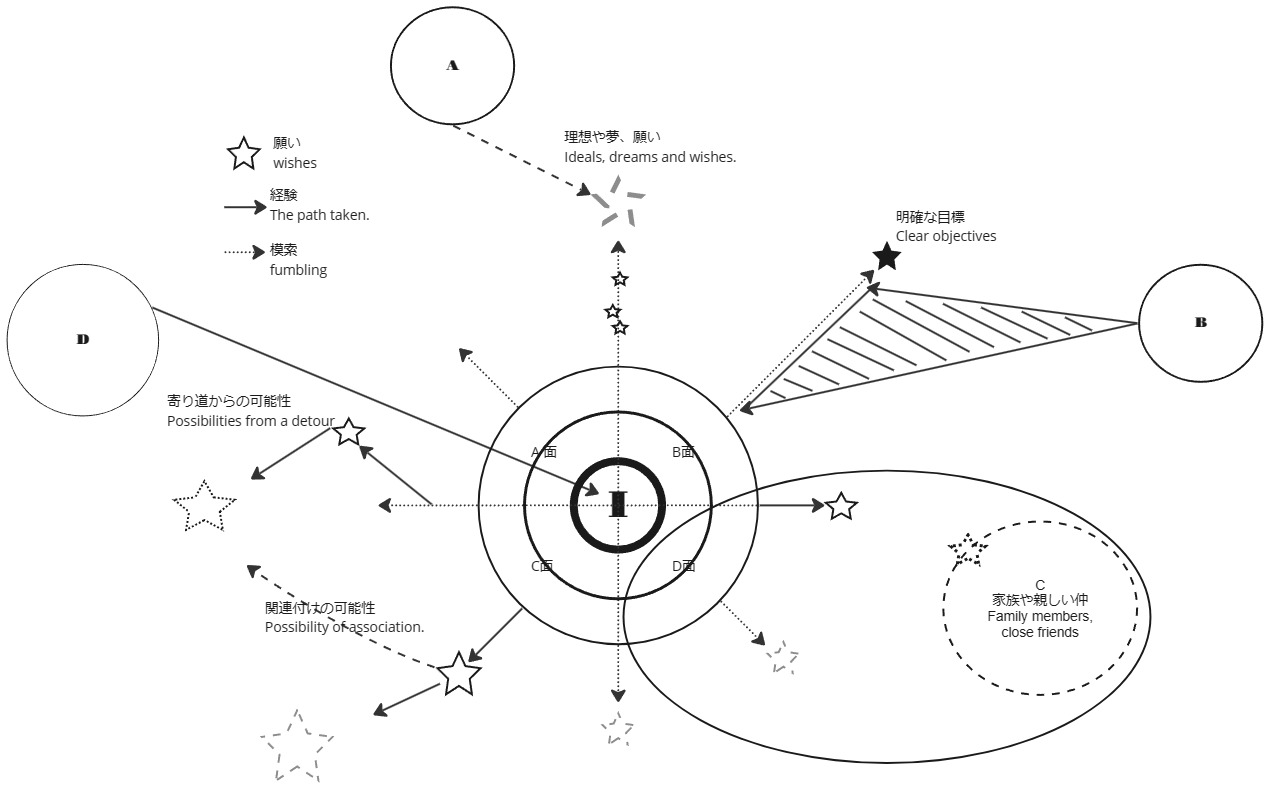
This article examines the nature of "wishes" within the framework of diversity. It argues that our individual desires are not isolated, but are interconnected with the "coordinates" of our unique perspectives and social contexts. By acknowledging that others hold different coordinates, we can transform personal wishes into a shared dialogue. Instead of imposing our own values, the author suggests that truly understanding the diversity of human aspirations allows us to cultivate a more empathetic and constructive approach to coexisting in a complex world.

ツールバーへスキップ